Share Mary Jane Lewis's obituary with others.
Invite friends and family to read the obituary and add memories.
Stay updated
We'll notify you when service details or new memories are added.
You're now following this obituary
We'll email you when there are updates.
Select your format and elements to print

IN LOVING MEMORY OF Mary Jane Lewis
Mary Jane
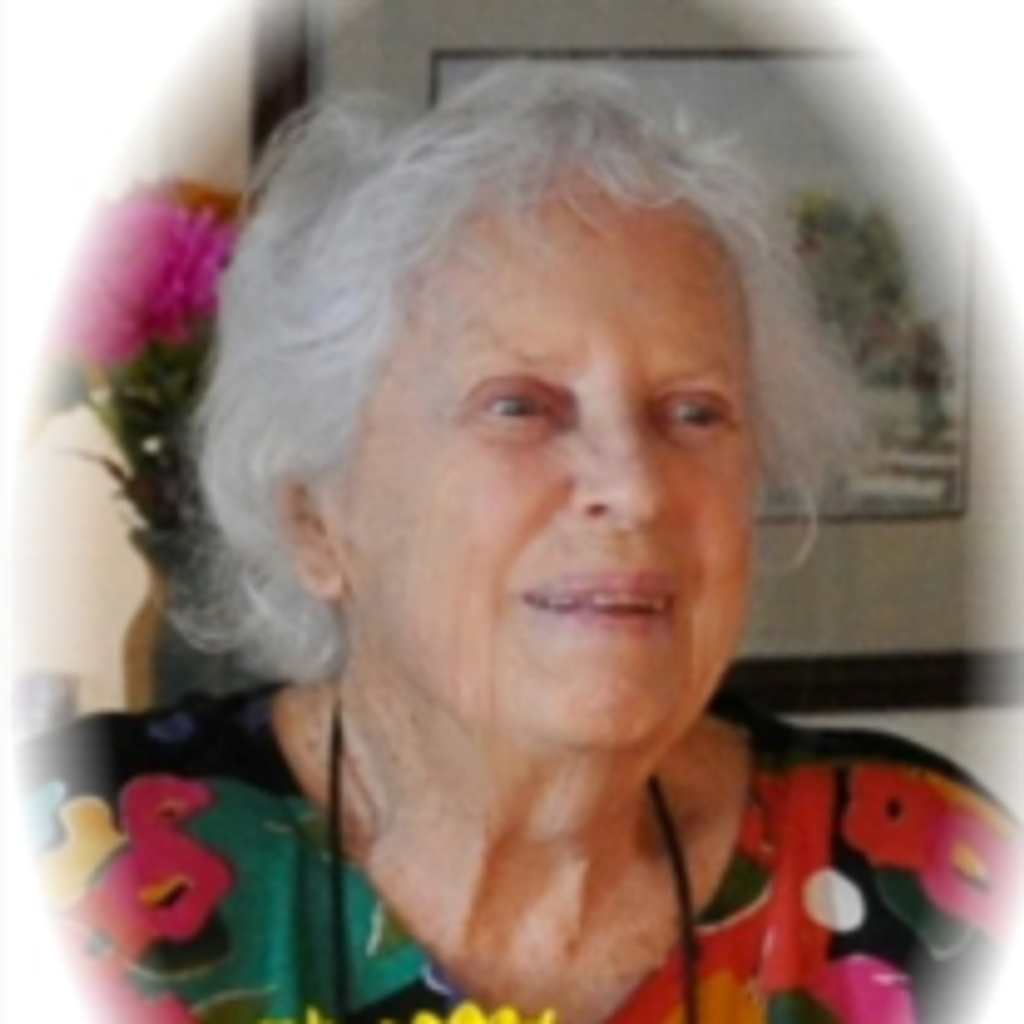
Lewis
Mar 13, 1923 — Oct 10, 2017
Mary Jane Lewis' Obituary
Mary Jane Lewis passed away unexpectedly on Tuesday, October 10, 2017, at the age of 94 at Kadlec Medical Center in Richland, WA. She was born in Pasco, Washington on March 13, 1923 to George and Genevieve Carroll.
She worked as a newspaper writer for the Tri-City Herald. Some of her hobbies included gardening, weaving, painting, swimming, flying. Mary Jane was a member of the Tri-Delt, Fr.Co Saddle Club and Allied Arts, Fr.Co Museum, Desert Fiber Arts, Eastern Washington Water Color Society, and Fr.Co Historical Society.
She leaves behind many that loved her dearly including her daughter Kathy Lewis, son Leonard (Karen) Lewis, granddaughter Kristi (Garry) Hagins, great grand daughters, Kaelee, Breena and Rylee Hagins.
Viewing will take place on Friday October 20 2017 at Hillcrest Bruce Lee Memorial Center (2804 W. Lewis St., Pasco) from 10-10:50am.
Funeral service will take place Friday October 20, 2017 at Hillcrest Bruce Lee Memorial Center (2804 W. Lewis St., Pasco) at 11 a.m. with burial to follow at City View Cemetery (1300 N Oregon Ave, Pasco, WA 99301).
Resume:
I began knitting when I was five and have always been fascinated with yarns and weaving. My first weaving's were on a very small, simple wooden loom with nails to hold the warp. My mother was a knitter and owned a yarn shop for many years. I often helped her customers finish projects when they got stuck or burned out on a project.
I am a graduate of Washington State University with a BS degree in Political Science in 1945. I worked at the Henry Street Settlement House on the lower east side of New York City after graduation, and then came back to Pasco to work for Seafirst Bank (Bank of America). After my two children were born I worked part time at Job's Nursery selling plants and doing landscape designs. The Tri-City Herald asked me to write a garden column and then asked me to come to work.
I spent the next 20 years as a staff features writer, garden columnist and page makeup editor covering the arts and entertainment field. I was allowed a lot of freedom in my writing which included everything from interviewing a famous New York City ballerina to flying in hot air balloons, a Rutan experimental plane and writing about horses.
It was while I was writing about the arts that I met Desert Fiber Art members and did as many stories as I possibly could about their many projects. At age 50, I began to learn to spin, dye and weave. For the past 30 years I have enjoyed many excellent workshops, conferences and continue to experiment with weaving techniques. It's fascinating to see what colors do when woven.
I have held offices on the Franklin County Park Board, Franklin County Historical Society, Desert Fiber Arts and am editor of the Franklin flyer quarterly and work in the photo archives at the museum. I am a member of the Allied Arts, the Eastern Washington Watercolor Society and have helped put on horse shows, timed rodeo events, laid out trail rides and weeded the grounds and scrubbed the saddle club's kitchen floor.
But the first shot of a shuttle in a new warp is still one of the most exciting moments for me!
Biography:
Mary Jane Lewis was born in March of 1923 at Our Lady of Lourdes Hospital, attended Longfellow School and Pasco High School 1938-1941. She played in the band, was an editor of the Sinewesah and a member of Honor Society.
Mary Jane graduated from Washington State University in 1945 with a degree in Political Science. At WSU she was a Tri-Delt and President of Panhellenic, served on the AWS, and was a member of the Women's Council. She was a member of Alpha Phi Sigma and president of Psi Chi, Psychology honorees.
After graduation she and a friend left for New York City and she worked at the Henry Street Settlement House on the Lower East Side of New York.
Returning to Pasco she worked as a teller for Seattle-First Bank, pulled weeds and did landscape designing for Job's Nursery until the Tri-City Herald asked her to do a Gardening column. From 1970 until 1989 she was a writer for the Herald working on the women's pages, Sunday section and providing the gardening column. Interviewing a famous ballerina, gliding over the Tri-Cities in a hot air balloon and writing about horses and arts and crafts were her favorite times.
After retiring she served on the Franklin County Park's and was its secretary for several years. She has been a member of the Franklin County Saddle Club helping to put on horse shows, time rodeos, lay out trails rides and scrub the kitchen floor. She is a member of Allied Arts, Desert Fiber Arts and the Eastern Washington Watercolor Society and the Franklin County Historical Society where she is co-treasurer, editor of the Franklin Flyer quarterly and works on the photo archives.
Memories:
2/28/2009
My first memory and the brightest, was seeing a flash of light crossing the room when I was about 2 years old. We were living in the basement of a house on A street west of 10th avenue in 1925. The ball of lighting seemed to be flying across the room toward an old iron stove.
My memories of growing up in Pasco in the 1920-30s, when the population was about 3,000 people, mostly railroaders and farmers was that Pasco was a very peaceful place to be. There were not many cars on the road and children were allowed a lot more freedom. We played in each other backyards, had night games under street lights, often on roller skates. The sidewalks of Pasco's downtown seemed to me to be very wide and fun to play games (like hop-scotch) on. We used to build cardboard houses over holes in the vacant lot near our house and play house. Today it would be hard to find a vacant lot in the area.
By the time I was six (1929) I was able to attend a Saturday movie by myself or with a friend (Nadene Edwards Ped or Rozann Horrigan Ryan). I remember getting there at one o'clock one Saturday and seeing a movie entitled "Rio Rita" or maybe that was the name of a song in the movie. I liked it so much I just sat there all afternoon until my mother, who wondered why I didn't come home, came and got me at 5 p.m. Needless to say, I didn't do that again. Nada and I used to be sent downtown (two blocks away) with a couple of dimes to buy little things for my mother. I also remember the men who came to our back door and asked if we had any work they could do for some food. They would ride the railroad boxcars into town, set up camp down by the river and walk up to town looking for work in the 1930's.
We lived between 6th and 7th on Lewis Street at the time and The Horrigans lived on the far end of the block. Rozann and I raced across the vacant lot kitty-corner from their house on our wat to school and Rozann usually won. When I was in the second grade (1932) we moved to Eighth Street, nest door to Longfellow School on the north side. It was great not to have to go far to school or to come home and the school yard with its wide entryway sidewalk and lawn was a great place to play on the weekend. The thing I liked about school then was we knew everyone's name-even all the older kids who used to entertain us at recess. When I was in the fourth grade (1934) and my brother John, was in the third grade he and my friend Nadene skipped up into our grade. It was great having them to do school work with because we had the same assignments so we couldn't forget! My mother knew a lot of the teachers and she fed three or four close friends at lunch several times a week. My friend, Nadene, and I earned a weekly allowance doing dishes.
About the times my brother and I started high school (1938), now Pasco City Hall, all the houses on A Street were for sale and my family bought Number 15. I rode my bicycle to school mod of the time in my freshman year. By the time I was a junior my brother and I bought a 1930 Model A Ford convertible coupe with rumble seat. I got to drive it a year before he could get his license. I drove it to school (picking up my friends on the way) in the morning and my dad took me back to school after lunch so my mother could have the car in the afternoon.
My dad worked for the railroad as a shop foreman for the Northern pacific railroad and we used to go down to the office near the shops to see him. Alice Hogan West and Elsie Anderson worked there for a while and I think Pat Sullivan Roach did too. Another spot to visit was the depot on South 4th Street that had the railroad offices in the upper part of the two story building and a restaurant next door, The Beanery. When the passenger train stopped in Pasco the passengers often went into the restaurant.
High School was a very busy time with all the studies and after school activities. I was assistant, then editor of the Sinewesah. I never dreamed I would later spend 20 years writing for the Tri-City Herald. My brother worked for the football, basketball and baseball teams but he was too small to play until his (1938-1941) senior year. He also wrote sports stories for the Pasco Herald.
Two of the activities that took a lot of our time were the boys' Drum and Bungle Corps sponsored by the American Legion and the girls' drill tea, sponsored by the Veterans of Foreign Wars. My brother John was a drummer and Harlan Ritter was the drum major for the Drum and Bugle Corps and they practiced at Pasco High School. Dr. Glenn, a Pasco dentist, was in charge of the Drum and Bungle Corps. The drill team was managed by Wave Lewis and her son Leonard Lewis did the drilling. The drill team also practiced at the high school or on Columbia Street between 3rd and 4th Streets. All summer we performed in various parades and social events around the area, in Walla Walla and wherever the state competition was scheduled. The Drum and Bugle Corp also competed with other corps across the state and some in Oregon.
To send flowers with our preferred florist or plant a memorial tree, please visit our flower store.
Funeral Services for Mary Jane Lewis
Viewing

October
20
Friday
Einan's at Hillcrest - Pasco
10:00 - 10:50 am
Funeral Service
October
20
Friday
Einan's at Hillcrest - Pasco
Starts at 11:00 am
Mary Jane Lewis' Guestbook
Visits: 3
This site is protected by reCAPTCHA and the
Google Privacy Policy and Terms of Service apply.
Service map data © OpenStreetMap contributors